
Air Combat Command (ACC)
17x Cyber Officer Selection
Refining the upper echelon cyber officer selection process.

The Air Force prides itself on creating great leaders through its training, education, and character development. But how are leaders selected among the pool of candidates to become the upper echelons of officers? That is the question our AF CyberWorx team worked with the 17x cyber career field heads at Air Combat Command (ACC). The effort was centered around researching and applying our findings within the cyber ecosystem to dig deeper into the officer selection process. Our problem statement was the following:
How might a system aggregate and present 17X billet, training, and education data to enable Cyber officers to make the best 17X talent management decisions more efficiently?
Our team entered into a 6-month effort to fully understand the selection board process and develop a design system alongside a series of process improvement recommendations. As the lead UX researcher and designer, I conducted subject matter expert (SME) interviews and industry-standard succession research. Once complete, we created a full set of platform-agnostic design criteria that would later become the system requirements.
Below you will find a more in-depth breakdown of our process and methods used throughout this project.
Due to the selection boards being a largely undocumented process, we simultaneously launched an effort to learn about the process and it's key personnel, while using industry best practices for succession planning to inform our question formation. Once we knew more about the Air Force's process, it was time to start asking questions! Our Team conducted user interviews with current and previous selection board members and related key decision-makers. A few of the questions we asked were the following:
Our Team sent a UX researcher to observe the Spring selection board in-person to supplement our interview data. This provided invaluable insight into the workflow, conversations, and methods employed in the actual board. With this data, we crafted a series of design criteria broken down by epics, user stories, and acceptance criteria for each need of the system as well as a phased process map. This output translated into system requirements that can be contracted out to developers for the build of the final system.
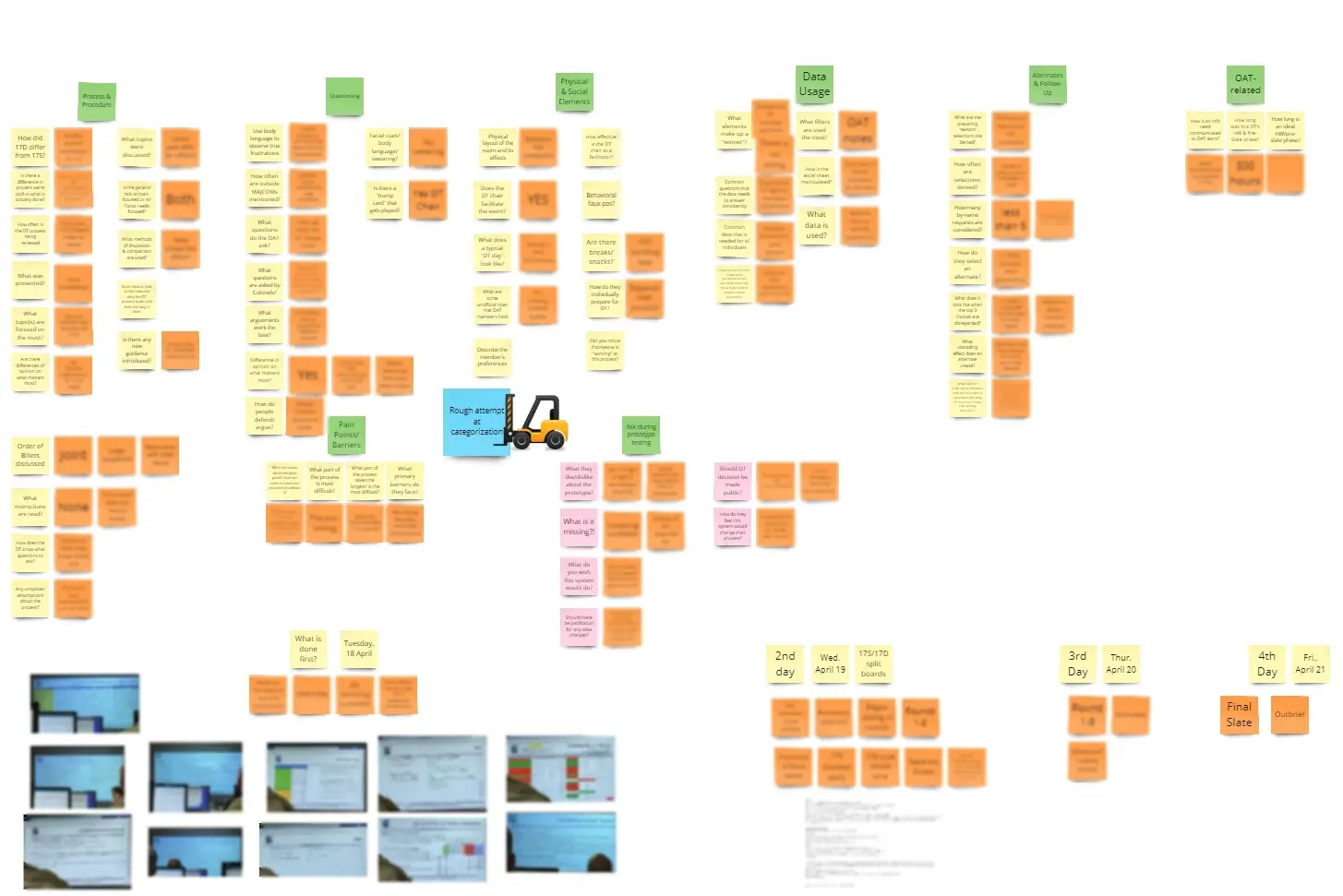
Interview Miro Board (blurred for security)
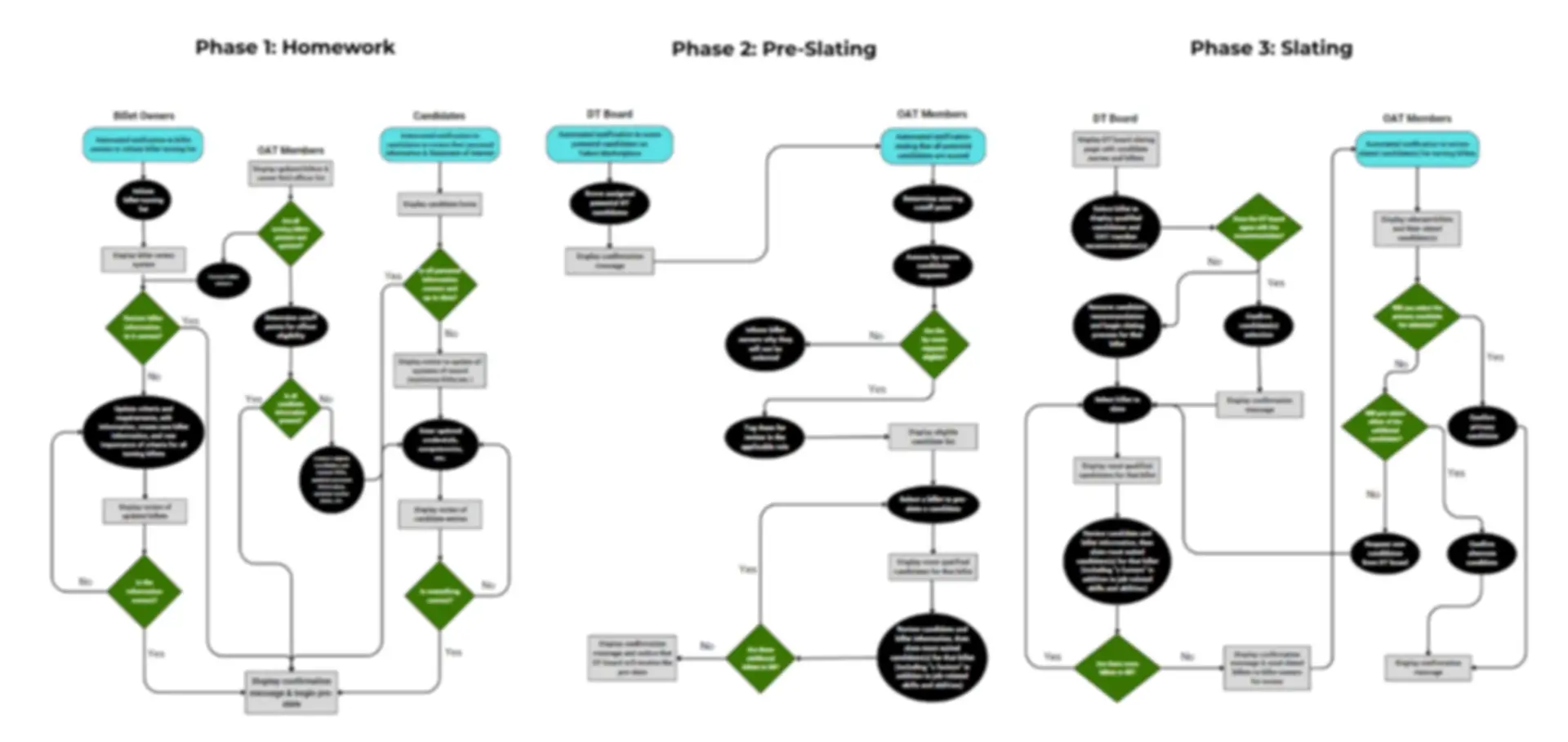
Process Map by Phase (blurred for security)
With an understanding of what this system would need to accomplish as well as the user needs for this system, our Team then moved to recommendations for an actual platform to build this on. We explored 7 different data-based platforms with the ability to acces Air Force systems of records that would be needed for the DT board data. We recieved demos from the developers for all 7 platforms, and gave a top 3 recommendation for platforms that are able to connect to the appropriate data, are customizable to the workflow of the DT process, and are relatively low-code and low barrier of entry to allow an eventual handoff to the government.
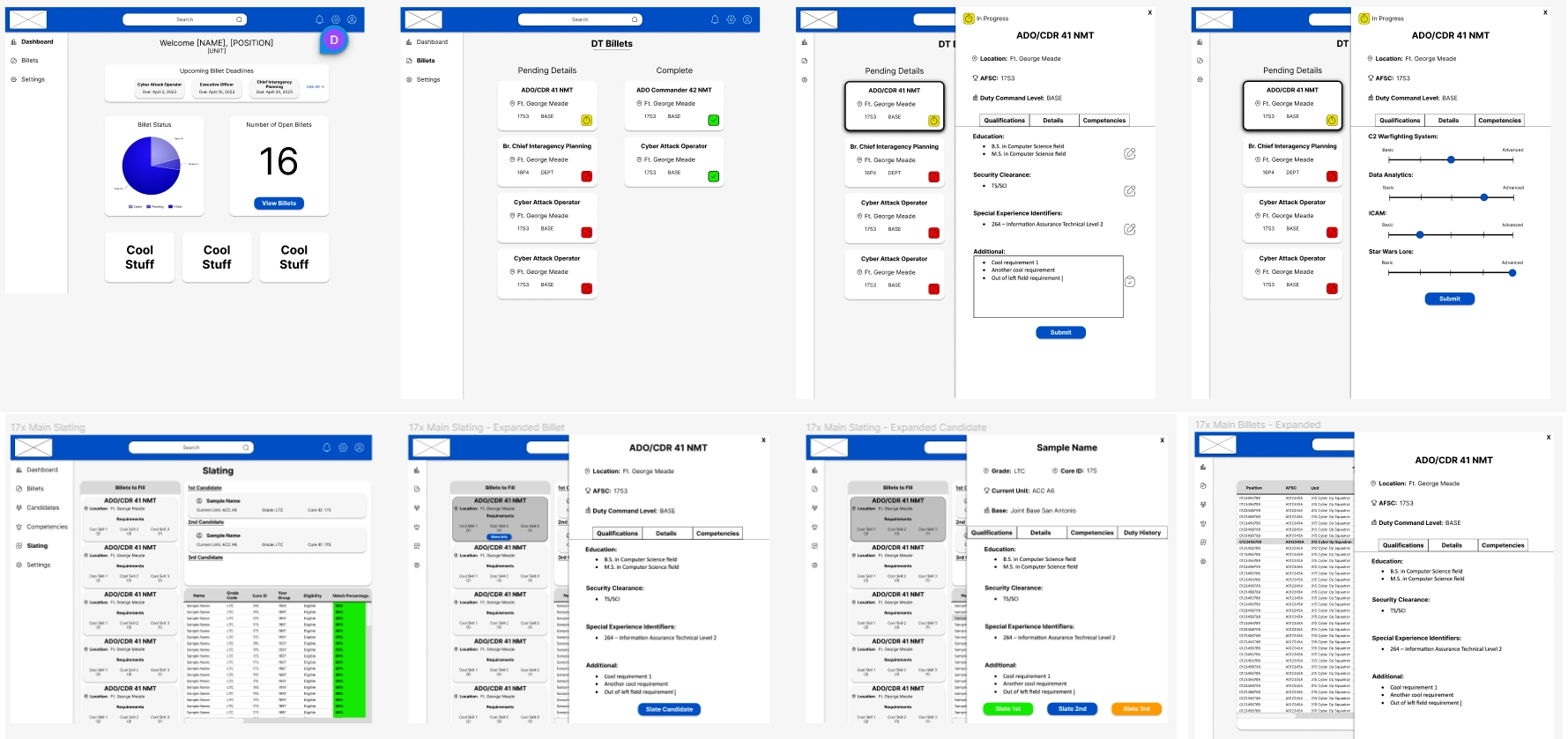
Mid-Fidelity System Wireframes (with fictional data)
As we finalized our design criteria, we also wanted to provide the client with potential platform options that could execute these requirements. Our team also had the good fortune of having a rapid MVP development group assist us in creating a notional MVP. To bolster this effort, our CyberWorx team created mid-fidelity wireframes to assist in the buildout of the on-screen elements.
To understand the feasibility of our recommendations and ensure we captured desired functionality, we conducted 2 rounds of synchronous user testing with our prototypes. All said and done, we handed over a full set of design criteria, system requirements, process improvement recommendations, and a set of potential development platforms to build the system. The client was thrilled with the results and thanked us for helping to document and improve on a vital process for Cyber officers.
Building or refining your system, but stuck on the UI and marketing plan? Contact me today!
Want to see how your business can harness a holistic digital marketing and user experience plan? Reach out today for a FREE consultation!